
Whether you are logging miles on a marathon training run, spending 12-hour shifts standing on hard retail floors, or just trying to walk the dog without wincing, foot pain can quickly derail your entire day. The right shoe insoles offer a simple, highly effective solution for lasting comfort, improved mobility, and better overall foot health.
Shoe insoles—also widely known as shoe inserts or footbeds—are removable layers placed inside your footwear to improve fit, enhance daily comfort, and address specific biomechanical issues. While most retail shoes come with basic, flat factory liners that offer little more than a thin barrier against the sole, upgrading to high-quality insoles can dramatically change how your feet feel at the end of a long day.
The benefits of good insoles extend far beyond simple plush cushioning. They provide crucial foot support, promote proper foot alignment from the ground up, and offer targeted foot pain relief. From absorbing heavy impact during a morning jog to redistributing pressure for those dealing with painful bunions or calluses, the right inserts prevent chronic fatigue.
In this comprehensive guide, we will explore exactly how insoles work, break down the various insole materials available, and help you match the right product to your unique foot shape. Whether you are searching for the best insoles for standing all day or need specialized support for flat feet, this guide will help you step into a more comfortable, pain-free life.
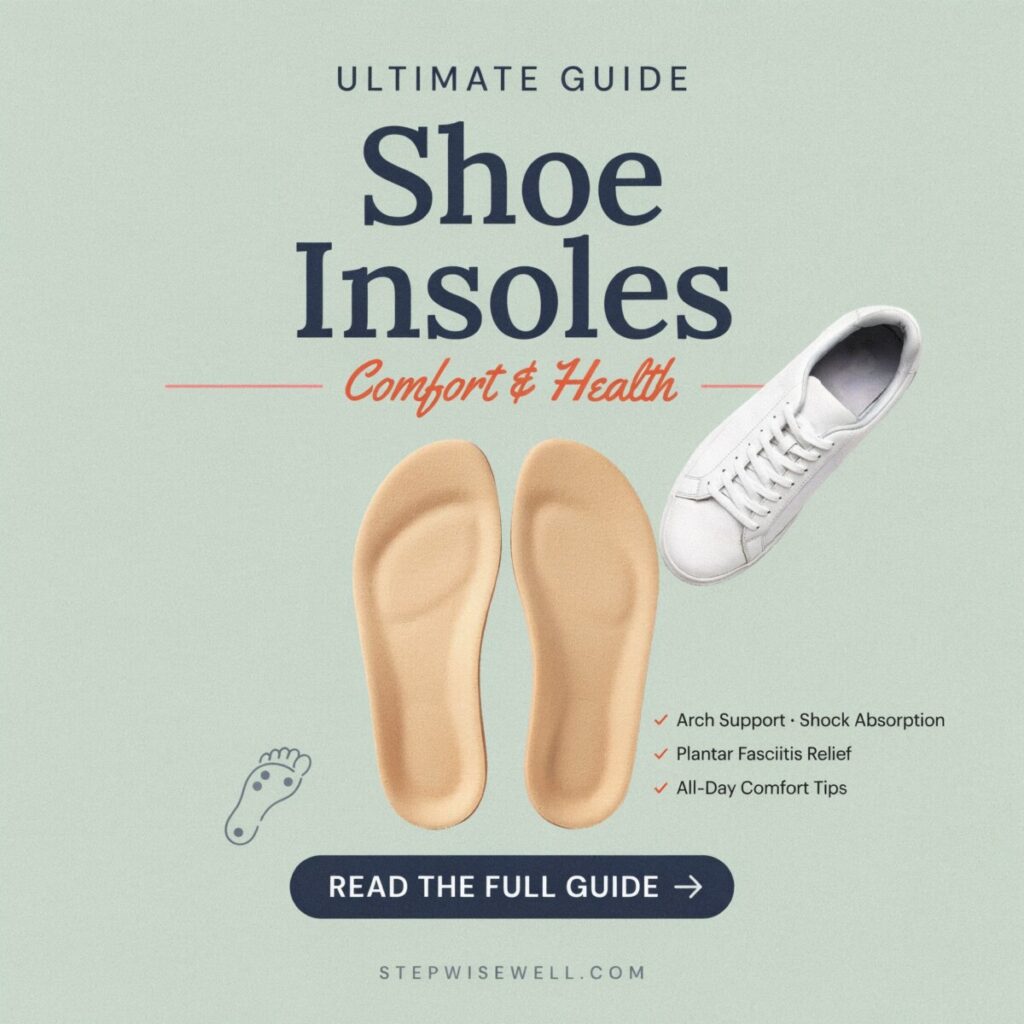
How Shoe Insoles Work: The Biomechanics of Comfort
To truly understand why orthotic insoles and cushioned insoles make such a profound difference, it helps to look closely at foot biomechanics. Every single time your foot strikes the ground during a walk or run, it absorbs a physical force equal to multiple times your total body weight. Quality shoe insoles manage this intense impact through several key mechanisms:
- Shock Absorption: Specialized materials like advanced gel insoles, EVA foam, and PU foam compress upon impact, effectively dissipating the kinetic energy that would otherwise travel up your shins, knees, hips, and lower back.
- Arch Support and Foot Alignment: The human foot features a natural arch that acts as a biological spring. Arch support insoles firmly cradle this structure, preventing the arch from collapsing under your body weight (which causes overpronation) and keeping the ankle, knee, and hip joints properly aligned.
- Pressure Distribution: Instead of letting your body weight bear down heavily on just the heel or the ball of the foot, well-designed inserts spread the physical load evenly across the entire footbed. This even distribution is crucial for callus prevention, bunion relief, and avoiding localized hot spots.
- Heel Stabilization: A deep, contoured heel cup cradles the natural fat pad under your heel bone, providing biological cushioning and preventing the heel from rolling inward or outward. This significantly improves your overall gait, balance, and stability on uneven surfaces.
When shopping for inserts, you will typically encounter two main formats: full-length insoles, which run continuously from heel to toe, and ¾-length insoles, which end just behind the ball of the foot. Additionally, you must carefully consider whether your current footwear features removable insoles. If your shoes or boots feature a built-in, glued-down footbed, you will likely need to use thin, ¾-length inserts or volume-reducing top-covers to avoid making the shoe uncomfortably tight in the toe box.
Types of Insoles and Materials: What Are They Made Of?
The real-world performance and longevity of your shoe inserts rely heavily on the specific insole materials used in their construction. Different compositions offer distinct advantages depending on your lifestyle, footwear choices, and specific foot conditions.
Foam Insoles (EVA and PU Foam)
EVA (ethylene-vinyl acetate) foam is a staple in running insoles and high-end athletic shoes. It is incredibly lightweight, highly durable, and provides excellent shock absorption without “bottoming out” quickly. PU (polyurethane) foam is slightly denser and heavier but often offers superior long-term resilience and structural foot support. Both foams are ideal for high-impact activities and rigorous outdoor use.
Memory Foam Insoles
Memory foam is famous for molding to the exact, unique shape of your foot, offering customized, plush comfort. While fantastic for casual wear, light walking, and short-term foot pain relief, memory foam tends to compress permanently over time and can trap and retain heat. It is generally not recommended for heavy athletic use or for individuals who require rigid structural support for alignment issues.
Gel Insoles
Gel inserts excel at localized, targeted shock absorption. You will frequently see gel pads strategically embedded in the heel or forefoot to soothe joint pain and absorb harsh impacts. They are noticeably heavier than foam but provide an excellent cooling effect and a uniquely plush feel, making them highly popular as work shoe insoles.
Cork and Leather
Natural cork molds beautifully to your foot over time and offers a firm, highly supportive base, while leather top-covers expertly manage moisture and reduce skin friction. These classic, natural materials are top-tier choices for dress shoes and casual loafers where breathability, odor control, and a very low profile are required.
Carbon Fiber and Rigid Plastics
Used primarily in high-end, prescription-style orthotic insoles, rigid materials strictly control motion and severely limit excessive overpronation or supination. They provide maximum structural support but very little actual cushioning, often requiring a secondary, softer foam top-cover for daily comfort.
Custom Orthotics
These are advanced prescription devices meticulously crafted from physical molds or digital 3D scans of your feet. Custom orthotics address severe biomechanical flaws and specific medical conditions, utilizing a complex combination of rigid shells and specialized padding to correct foot alignment perfectly.
Match Insoles to Common Foot Problems
No two human feet are exactly alike. Finding the best insoles for shoes requires matching the insert’s features to your physiological needs and daily demands.
Plantar Fasciitis
Insoles for plantar fasciitis need to reduce daily strain on the thick connective tissue running across the bottom of your foot. Look for inserts featuring a deep heel cup to stabilize the fat pad, firm arch support to prevent overstretching, and a slight heel elevation to take tension off the inflamed fascia.
Flat Feet and Overpronation
If your arches collapse when you stand (overpronation), your ankles roll inward, leading to knee and lower back pain. You need rigid or semi-rigid arch support insoles designed for motion control. These inserts guide the foot into a neutral position, vastly improving your overall gait and posture.
High Arches and Supination
High arches do not naturally flatten to absorb ground shock, meaning the outer edges of your feet take the brunt of the impact. People with high arches need highly cushioned insoles with flexible arch support to maximize shock absorption and encourage a natural foot strike.
Heel Pain and Achilles Tendonitis
Heel pain relief insoles should focus on elevating the heel slightly and providing plush padding. A raised heel reduces the pull on the Achilles tendon, while a contoured heel cup prevents side-to-side friction during movement.
Metatarsalgia (Ball-of-Foot Pain)
If you experience burning in the forefoot, look for inserts featuring a metatarsal pad. This small, raised dome sits just behind the ball of the foot, lifting the metatarsal bones to relieve pressure on sensitive nerves.
Standing All Day / Retail Workers
The best insoles for standing all day on hard floors combine durable structural support with ample cushioning. Look for high-volume work shoe insoles with reinforced arches and thick heel padding.
Diabetes and Sensitive Feet
Diabetic insoles require specialized attention. Individuals with neuropathy need seamless, non-binding inserts made from soft materials like Plastazote to prevent blisters. Caution: Always consult a podiatrist before choosing inserts for diabetic foot care to ensure they meet medical safety standards.
How to Choose the Right Insole
Navigating the crowded aisle of shoe inserts can be overwhelming. Follow these steps to pick the right pair for your unique foot shape and lifestyle.
1. Identify Your Foot Type
Perform the “wet test”: wet the bottom of your foot and step on dry cardboard.
- A full footprint indicates flat feet (need motion control).
- A footprint showing only the heel and ball indicates high arches (need cushioning).
- A footprint with a distinct curve indicates a neutral arch (need stability).
You can also check wear patterns on old shoes. Inside edge wear suggests overpronation, while outside edge wear suggests supination.
2. Measure Arch Height and Shoe Volume
Consider the space inside your footwear. Sneakers and hiking boots usually have high volume and easily accommodate thick, full-length orthotic insoles. Dress shoes and tight casual shoes have low volume; you will need thin, low-profile inserts that won’t crowd the toe box or ruin the shoe fit.
3. Match the Activity
Running insoles require lightweight, high-rebound materials like EVA foam. Work shoe insoles need durable, supportive bases for standing on hard floors. Casual insoles can prioritize plush comfort and memory foam.
4. Sizing and Trimming Insoles
Most off-the-shelf insoles are sold by shoe size ranges (e.g., Men’s 9-11). To get a perfect fit, take the original factory liner out of your shoe and place it on top of the new insole. Trace the toe line with a marker, and carefully trim the new insert with heavy-duty scissors. Always trim conservatively—you can always cut more off, but you cannot add material back!
Fitting, Break-In, and Caring for Your Insoles
Proper installation and regular maintenance are key to maximizing the lifespan and effectiveness of your new shoe insoles.
Insertion and the Break-In Period
Before inserting your new insoles, always remove the existing factory liners from your shoes. Leaving them in will cause the shoe to fit too tightly and restrict blood flow. Once inserted, do not immediately wear them for a 10-mile run or a 12-hour shift. Your muscles and tendons need time to adapt to the new foot alignment. Start by wearing them for just one to two hours on the first day, gradually increasing the wear time over a standard break-in period of one to two weeks.
Cleaning and Maintenance
To keep your insoles fresh and odor-free, spot-clean them regularly. Remove them from your shoes and hand wash using warm water and mild detergent. Gently scrub the surface with a soft cloth. Never put them in a washing machine or dryer, as high heat will warp memory foam, melt adhesives, and destroy the structural integrity of gel insoles and EVA foam. Let them air dry completely before putting them back in your shoes.
When to Replace
Even the best insoles for shoes eventually wear out. Replace everyday walking or work insoles every 6 to 12 months. Running insoles should be swapped out every 300 to 500 miles. If you notice the arch support has flattened, the heel cup is cracked, or the cushioning no longer rebounds, it is time for a new pair to maintain proper pressure distribution and foot pain relief.
When to Choose Custom Orthotics or See a Professional
While over-the-counter inserts successfully solve many everyday comfort issues, they are absolutely not a medical cure-all. You should actively seek a podiatrist referral if you experience chronic, severe foot pain, recurring stress fractures, or structural deformities that simply do not respond to standard, store-bought arch support insoles.
A qualified podiatrist or orthopedist will perform a comprehensive, clinical gait analysis and a thorough physical examination to deeply assess your unique foot biomechanics. Based on this detailed clinical evaluation, they may formally prescribe custom orthotics. Unlike generic, mass-produced shoe inserts, custom orthotics are advanced medical devices meticulously crafted specifically from 3D scans or physical plaster casts of your feet to correct severe pronation, extreme supination, or structural leg-length discrepancies.
In the United States, health insurance coverage for custom orthotics varies widely from plan to plan. While many standard health insurance policies do not cover them out-of-pocket, some comprehensive policies will cover a significant portion if they are deemed strictly medically necessary by a licensed physician. Always check directly with your specific insurance provider regarding coverage details, annual deductibles, and whether you need a formal referral from a primary care doctor before seeing a foot specialist.
Quick Buying Guide and Budget Options
When shopping for the best insoles for shoes, it highly helps to understand the current retail pricing landscape and exactly what you get at each financial tier.
- Budget Off-the-Shelf ($10 – $25): These are typically made of basic, single-density gel or cheap foam. They provide immediate, short-term cushioning and are perfectly fine for occasional wear or minor shoe comfort improvements. However, they completely lack structural support and will compress permanently very quickly.
- Mid-Range Supportive Insoles ($30 – $65): This is the undeniable sweet spot for most average consumers. These premium inserts feature dual-density EVA foam, rigid arch support shells, deep anatomical heel cups, and specialized metatarsal pads. They are highly recommended for managing plantar fasciitis, flat feet, and long shifts standing on hard floors. You can easily find these at big-box retail stores, specialty running shops, and major online marketplaces.
- Custom Orthotics ($300 – $800+): These are prescription-grade, specialized medical devices. While undeniably expensive upfront, they offer unparalleled, deeply personalized foot support and are built to easily last for several years of daily use. They are best purchased through a certified medical supply outlet or directly from your local podiatrist’s office.
When shopping, always look for products that have been rigorously evaluated by authoritative medical sources, such as those proudly carrying the American Podiatric Medical Association (APMA) Seal of Acceptance. This seal ensures the product actively promotes foot health, safety, and long-term structural integrity.
Example Insole Profiles (Not Brand Endorsements)
- Memory foam cushioned insoles: Best for casual everyday comfort and shock absorption in low-impact shoes.
- Arch support orthotic-style insoles: Best for overpronation and long shifts on hard floors; look for a deep heel cup and firm arch.
- Thin dress shoe insoles: Low-profile cushioning and light arch support to fit narrow toe boxes.
Step Into Lasting Comfort
Upgrading your daily shoe insoles is truly one of the simplest, most cost-effective ways to immediately improve your daily mobility, drastically reduce physical fatigue, and protect your long-term joint health. By taking the time to understand your unique foot type, selecting the right materials for your lifestyle, and giving your feet adequate time to adjust, you can completely eliminate daily discomfort and get back to doing the physical activities you love most.
Ready to find your absolute perfect match? Be sure to read our highly related guides on the [best shoes for standing all day] and [how to treat plantar fasciitis at home]. Still not entirely sure which specific insole fits your unique foot shape? [Take our 30-second Foot Comfort Quiz here!] Drop a comment below and let us know which inserts completely changed your daily stride!
