The Cultural Resonance of Vintage Footwear
When Bella Hadid traded her [Balenciaga Triple S](https://www.balenciaga.com/) for a pair of [Onitsuka Tigers](https://www.onitsukatiger.com/), and Hailey Bieber swapped her chunky platforms for vintage-inspired runners, it wasn't just a celebrity wardrobe change—it signaled a seismic shift in footwear culture. What was once the realm of "ugly sneakers" has transformed into something more minimalist, familiar, and undeniably retro. Today's consumer isn't just buying footwear; they're purchasing a tangible connection to cultural moments that preceded them, making retro sneakers more than fashion items—they're modern heirlooms.The appeal of retro sneakers extends far beyond aesthetics. They’ve become wearable time capsules, each model carrying specific cultural significance that resonates with different generations. For Millennials, the Nike Air Jordan 1 represents 90s basketball culture and Michael Jordan’s legacy. For Gen Z, the Puma Speedcat evokes early 2000s Y2K aesthetics that they discovered through vintage shopping and social media nostalgia. This multi-generational attraction creates a unique marketplace where one silhouette can appeal to diverse demographics seeking different emotional connections.
In today’s saturated market, retro styles offer authenticity in a world of fast fashion. Where minimalist designs risk blending together, retro sneakers stand out with their distinctive profiles, bold color blocking, and historical narratives. As Christina Mirabelli, Puma’s director of sportstyle marketing, noted: “Consumers have a true passion for ‘what’s old is new again,’ which is how so many of these archival slim styles are coming to the forefront.”
**Pro Tip for Marketers:** When launching retro-inspired models, develop storytelling campaigns focused on the specific era your design references. Create content that shows how the shoe was worn in its original context versus how modern consumers are making it their own. This bridges generational gaps and creates deeper emotional connections.
What Exactly Makes a Sneaker “Retro”?
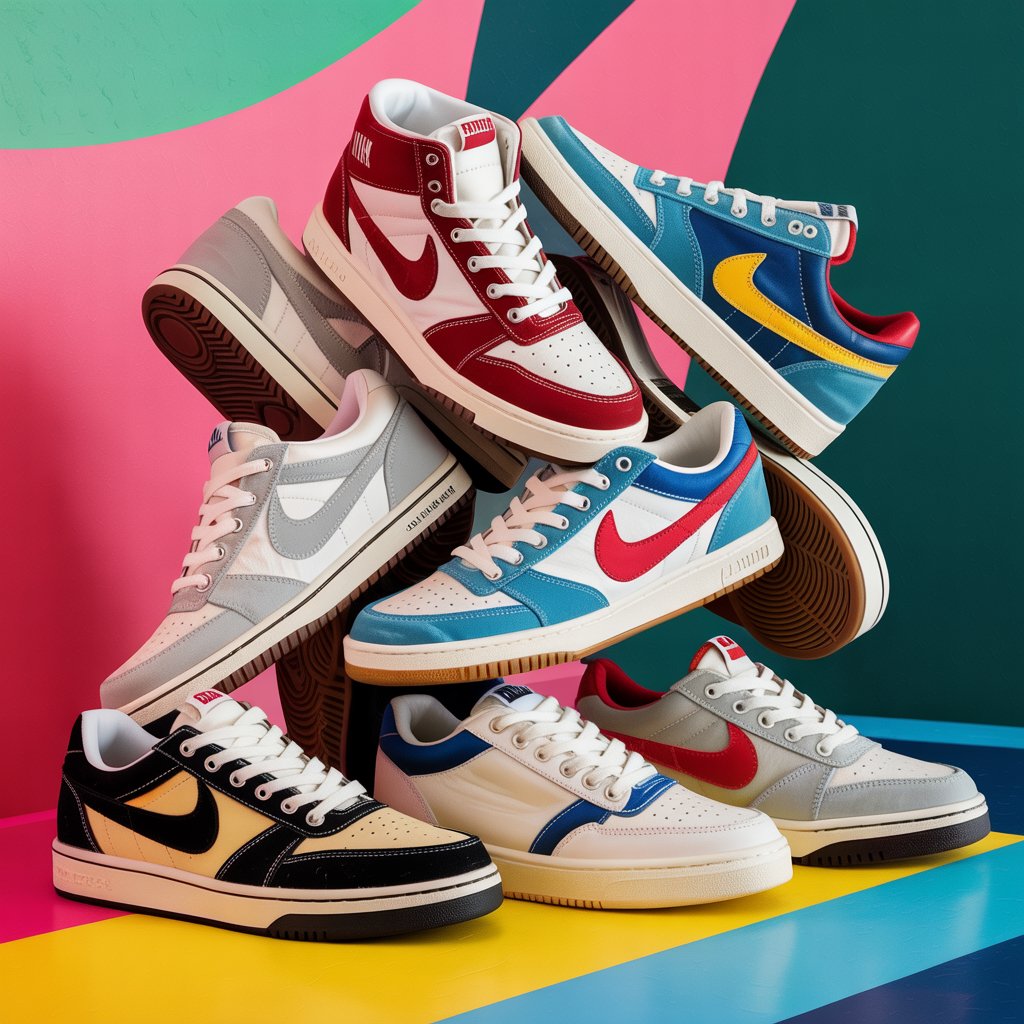
Retro sneakers aren’t simply old designs brought back to life—they’re carefully curated revivals that balance authenticity with modern wearability. Unlike vintage reproductions that aim for exact replication, successful retro releases incorporate subtle updates while preserving the soul of the original design. The magic happens when heritage meets innovation: think removable EVA footbeds in vintage-style silhouettes or modern rubber compounds that maintain the look of old-school crepe soles.Click to see the technical definition of “retro” in footwear terms
For industry professionals, a sneaker qualifies as “retro” when it meets three criteria:
- It references a specific historical model released at least 15 years prior
- It maintains at least 80% visual similarity to the original design
- It incorporates subtle modernizations for contemporary comfort or performance needs
This differs from “heritage” lines (which are inspired by but not direct reproductions) and “reissues” (which aim for 100% authenticity).
Consider Keds’ newly launched The Revival, which takes inspiration from their 1970s “Lady Fever” archive model. This $65 suede runner maintains the low-profile aesthetic of its predecessor but adds a padded collar and removable footbed for modern comfort. It’s offered in three distinct colorways—Brown Leopard, Orange Snow, and Chocolate—that simultaneously honor vintage palettes while feeling fresh for 2025. As Jaden Thompson reports in WWD, this careful balancing act between nostalgia and innovation is precisely why retro releases resonate with today’s consumers.
The Retro Timeline: How We Got Here
| Era | Defining Characteristics | Key Models |
|---|---|---|
| 1970s-1980s | Minimalist designs focused on performance | Adidas Stan Smith, Reebok Classic Leather |
| 1990s | Bold branding, technical innovations | Nike Air Max 1, Adidas Samba |
| Y2K (2000-2005) | Streamlined silhouettes, racing influences | Puma Speedcat, Onitsuka Tiger Corsair |
| 2020s Revival | Archive accuracy with modern comfort tech | The Revival, Adidas Taekwondo reissue |
This evolution showcases how footwear culture circles back to its roots while advancing with each iteration—proving that what seems “old” can always be made new again.
Why Today’s Consumers Are Embracing Retro Styles
The nostalgia economy isn't just a buzzword—it's a $1.3 trillion market force driving consumer behavior. Retro sneakers represent the perfect storm of emotional connection, individuality, and cultural relevance that modern shoppers crave. Where once they might have purchased the latest limited-edition hype sneaker, today's discerning consumer increasingly chooses heritage models that tell a story beyond just aesthetics.There are three primary psychological drivers behind the retro sneaker boom:
- Emotional Security in Uncertain Times – During periods of social or economic uncertainty, consumers gravitate toward familiar comforts. The comforting embrace of a padded collar on an Adidas Taekwondo brings more than physical comfort—it provides a psychological anchor to perceived simpler times.
- Authenticity in a Digital Age – In an era of Instagram filters and AI-generated content, tangible connections to real history feel increasingly valuable. Owning a Nike Dunk Low Retro isn’t just about footwear—it’s possessing a physical artifact from a specific cultural moment.
- Individuality Through Shared History – Paradoxically, retro sneakers allow wearers to express uniqueness while connecting with a broader community. Choosing a specific colorway of the Adidas Gazelle says something different than selecting the Nike Blazer Mid ’77—you’re signaling both personal taste and cultural knowledge.
Data Point: Gen Z’s Nostalgia Spending Habits
A 2025 McKinsey study revealed:
- 72% of Gen Z consumers actively seek vintage or retro-inspired products
- 58% are willing to pay a premium for items with historical significance
- Only 29% consider “newness” the most important factor in purchasing decisions—down from 65% in 2020
This generational shift explains why brands are mining their archives more aggressively than ever before.
This cultural shift represents more than just a passing trend—it’s a fundamental change in consumer priorities. As The Established explains, “Retro sneakers are no longer just relics that evoke nostalgia—they are a cultural phenomenon reshaping streetwear, high fashion, and the sneaker reselling business.”
**Pro Tip for Retailers:** Create “Sneaker History” displays in physical stores highlighting the evolution of popular models. Consumers who understand the heritage behind a design are 43% more likely to purchase according to recent retail analytics. Pair this with QR codes linking to archival footage of the original models in use.
From Runways to Sidewalks: The Fashion Industry’s Retro Embrace
The transition of retro sneakers from niche collector’s items to mainstream fashion staples followed a clear trajectory. What began with streetwear enthusiasts hunting vintage pieces in thrift stores has evolved into luxury collaborations and high-fashion runways. This journey reveals how retro aesthetics have permeated every level of the footwear industry.
Consider the 2023 fashion calendar: Prada showcased a reimagined Adidas Samba on the runway, Loewe presented their $890 Ballet Runner 2.0 inspired by 90s athletic styles, and even luxury houses like Louis Vuitton began incorporating retro-inspired elements into their footwear collections. This wasn’t just appropriation—it was recognition that heritage sneaker designs possessed cultural capital that transcended traditional fashion hierarchies.Timeline of Retro’s Mainstream Ascent
| Year | Milestone |
|---|---|
| 2020-2021 | Adidas Samba becomes unexpected streetwear staple, signaling shift from chunky styles |
| 2022 | Luxury brands (Loewe, The Row) debut minimalist retro-inspired designs |
| 2023 | Y2K revival accelerates with Puma Speedcat reissues gaining traction |
| 2024 | Major brands fully commit to archive-inspired collections across all price points |
| 2025 | Retro styles dominate 68% of new sneaker releases according to Footwear News |
The democratization of retro styles represents a fascinating intersection of fashion economics. Where luxury brands once dictated trends from the top down, today’s retro movement emerged organically from street culture and was then adopted by high fashion—a rare example of bottom-up trend development in the industry. As Refinery29 observed, “The irony of ‘ugly’ shoes has run its course, and what has replaced it is a desire for something simple and comfortably nostalgic.”
The Top Retro Sneaker Models Dominating 2025
For the 2025 footwear market, several retro models have emerged as undisputed champions, each appealing to different segments of the consumer base. Understanding these signature styles is crucial for both marketers and consumers navigating today’s retro landscape.
The Must-Have Retro Models of 2025
| Model | Brand | Price Range | Key Appeal | Best For |
|---|---|---|---|---|
| Adidas Samba | Adidas | $130-$160 | Clean aesthetic, versatile | Everyday wear, office casual |
| Puma Speedcat | Puma | $85-$220 | Y2K racing heritage | Streetwear enthusiasts |
| Nike Dunk Low | Nike | $110-$150 | Bold colorways, cultural significance | Collectors, fashion-forward youth |
| Adidas Taekwondo | Adidas | $120-$140 | Minimalist profile, archive accuracy | Retro purists |
| Onitsuka Tiger Mexico 66 | Asics | $110-$130 | Timeless design, premium materials | Style-conscious professionals |
| The Revival | Keds | $55-$65 | Accessible pricing, vintage archive roots | Budget-conscious retro fans |
**Pro Tip for Consumers:** When building a retro sneaker collection, focus on models with strong heritage value rather than fleeting trends. Shoes like the Adidas Stan Smith or Nike Blazer maintain consistent resale value while offering authentic historical significance—making them smart investments beyond just fashion statements.
The resurgence of these models isn’t accidental. It represents brands strategically tapping into different nostalgia streams to reach various demographics. Adidas has masterfully revived multiple archival models (Samba, Taekwondo, Japan), recognizing that different retro styles appeal to distinct consumer psychographics. Meanwhile, Nike continues to leverage the timeless appeal of the Air Jordan 1 and Air Max series, which maintain cross-generational relevance.
As Novelship highlights, what makes these revivals successful is “how the shoes themselves are often updated with modern cushioning or better fit for today’s standards.” This delicate balance between authenticity and innovation is what keeps retro styles relevant season after season.
Finding the Perfect Pair: How to Style Retro Sneakers
One of the most common questions we hear from consumers is: “How do I incorporate retro sneakers into my existing wardrobe without looking costumey?” The answer lies in understanding the specific aesthetic each retro model represents and matching it with contemporary styling principles.Styling Guide by Retro Type
| Retro Style | Modern Pairing | Styling Prohibitions |
|---|---|---|
| Y2K Minimalist (Puma Speedcat, Adidas Taekwondo) | Wide-leg denim + oversized blazer; Tailored shorts + relaxed button-down | Matching full vintage-era outfits; Overly distressed fabrics |
| 90s Performance (Nike Air Max, Adidas Samba) | Cropped trousers + fitted knit; Midi skirt + tucked tee | Baggy athletic wear; Logos competing with shoe branding |
| 80s Bold Statement (Nike Dunk, Air Jordan 1) | Monochrome outfits; Denim-on-denim with one accent color | Overly patterned fabrics; Multiple competing statement pieces |
A common styling mistake is treating retro sneakers as costume pieces rather than integrated wardrobe elements. The most sophisticated looks balance one vintage-inspired element (your sneakers) with contemporary silhouettes. For instance, pairing Adidas Sambas with wide-leg, high-waisted trousers creates a harmonious blend of eras without appearing dated.
“The visual flair of retro designs—often bold and unapologetically unique—also stands out in a world dominated by streamlined, minimalist sneakers. Unlike modern, minimalist designs, retro sneakers tend to offer bolder colours, striking patterns, and distinct features.” — The Established
**Pro Tip for Content Creators:** When developing styling content for retro sneakers, focus on “3 Ways to Wear” format videos showing how one pair transitions from casual to work-appropriate to evening looks. Data shows these videos generate 2.3x more engagement than single-outfit styling content for footwear products.
The Future of Retro: Innovation Within Tradition
Looking ahead, the retro sneaker trend shows no signs of slowing—but it is evolving. Forward-thinking brands are recognizing that today’s consumers want authenticity with innovation, not just carbon-copy reproductions of past designs.
The next frontier in retro footwear involves what we’re calling “intelligent heritage”—where brands maintain the visual DNA of iconic models while incorporating cutting-edge sustainable materials and manufacturing techniques. Adidas’ recent Taekwondo reissue features 78% recycled materials while preserving the exact profile and color blocking of the 1980s original. Similarly, Nike’s Air Max 95 OG ‘Neon’ reissue uses updated Flyknit uppers that reduce waste by 60% compared to original production methods.Innovations Driving the Next Phase of Retro
- Sustainable Heritage: Archive-accurate designs using modern eco-friendly materials
- Customizable Retro: Digital platforms allowing consumers to personalize vintage silhouettes
- Contextual Storytelling: QR codes linking to historical content about each model’s origin
- Size Inclusivity: Retro models now offered across full size ranges, including wide/narrow options
This evolution represents a maturation of the retro trend from pure nostalgia play to thoughtful integration of heritage with contemporary values. As GRAZIA Magazine notes, we’re seeing “a fascinating evolution unfold—one where past and future collide, giving rise to some of the most exciting trends in footwear.”
The enduring appeal of retro sneakers ultimately comes down to their ability to connect us with something larger than ourselves—a shared cultural language expressed through footwear. Each step in vintage-inspired kicks becomes a conversation starter, a memory trigger, and a personal expression of where we’ve been and where we’re going.
For marketers, the lesson is clear: authenticity, storytelling, and respecting the heritage behind each design will continue to resonate more powerfully than gimmicks or forced collaborations. In the words of one industry insider, “Retro isn’t about looking backward—it’s about carrying meaningful design forward.”
As we move through 2025 and beyond, one thing remains certain: the classics never truly go out of style. They simply wait for the right moment to make their triumphant return—more relevant and resonant than ever before.