
Pro Tip: Did you know that up to 72% of adults wear shoes that don’t fit properly? According to [Vionic](https://www.vionicshoes.com/blog/how-to-measure-your-shoe-size-for-a-perfect-fit/), ill-fitting footwear is the leading cause of preventable foot problems. Save yourself years of discomfort by getting measured correctly—your body will thank you long-term.
Why Your Shoe Size Matters More Than You Think
Your footwear isn’t just about style—it’s foundational to your entire body’s health. When shoes fit improperly, the consequences cascade upward from your feet to your hips and spine. Research published in the Journal of Foot and Ankle Research found that up to two-thirds of Americans wear incorrectly sized shoes, leading to chronic foot pain and posture issues. This isn’t just about blisters; it’s about how your whole body aligns with every step you take.
- Pain starts small but compounds over time: That slight pinch in your toe box today could become bunions tomorrow
- Your feet change throughout life: Pregnancy, aging, and weight fluctuations alter foot dimensions permanently
- Improper fit damages footwear: Shoes stretched beyond their designed shape lose structural integrity quickly
- Performance suffers: Athletes with incorrect sizing experience up to 22% less stability during movement
“From a woman’s perspective, finding the right fit can mean a lot of different things: the right fit for my lifestyle, the right fit for my closet and the right fit for an occasion.”
— Anne Truscott, founder and director of Revere Shoes revereshoes.com
Consider this: when you wear shoes that are too tight, pressure points develop that restrict blood flow and nerve function. Over time, this changes how you walk—creating unnatural compensation patterns that strain your knees, hips, and lower back. The Clarks fitting guide emphasizes that proper alignment begins at the foot, making correct sizing non-negotiable for overall wellness.
The Reality of Changing Foot Dimensions
Most consumers operate under the mistaken belief that their shoe size remains constant throughout adulthood. Nothing could be further from the truth. Feet naturally widen and flatten as we age due to ligament laxity and fat pad displacement. Pregnancy causes permanent foot changes in 60-70% of women as hormone-induced ligament relaxation alters foot structure. Even significant weight gain or loss redistributes pressure across your foot’s architecture.
This constant change means your “forever size” is a myth. The search results confirm that regular foot measurements are essential, especially every 2-3 years or after major life events. Nike’s measurement guide specifically recommends checking your size at the end of the day when feet are at their largest volume due to natural swelling from daily activity.
Without current measurements, you’re essentially guessing what your feet need. Modern footwear technology has also evolved—the same numerical size today provides different support and room than it did a decade ago. Understanding these dynamics transforms shoe shopping from a frustrating chore into a strategic investment in your mobility.
How to Accurately Measure Your Feet at Home
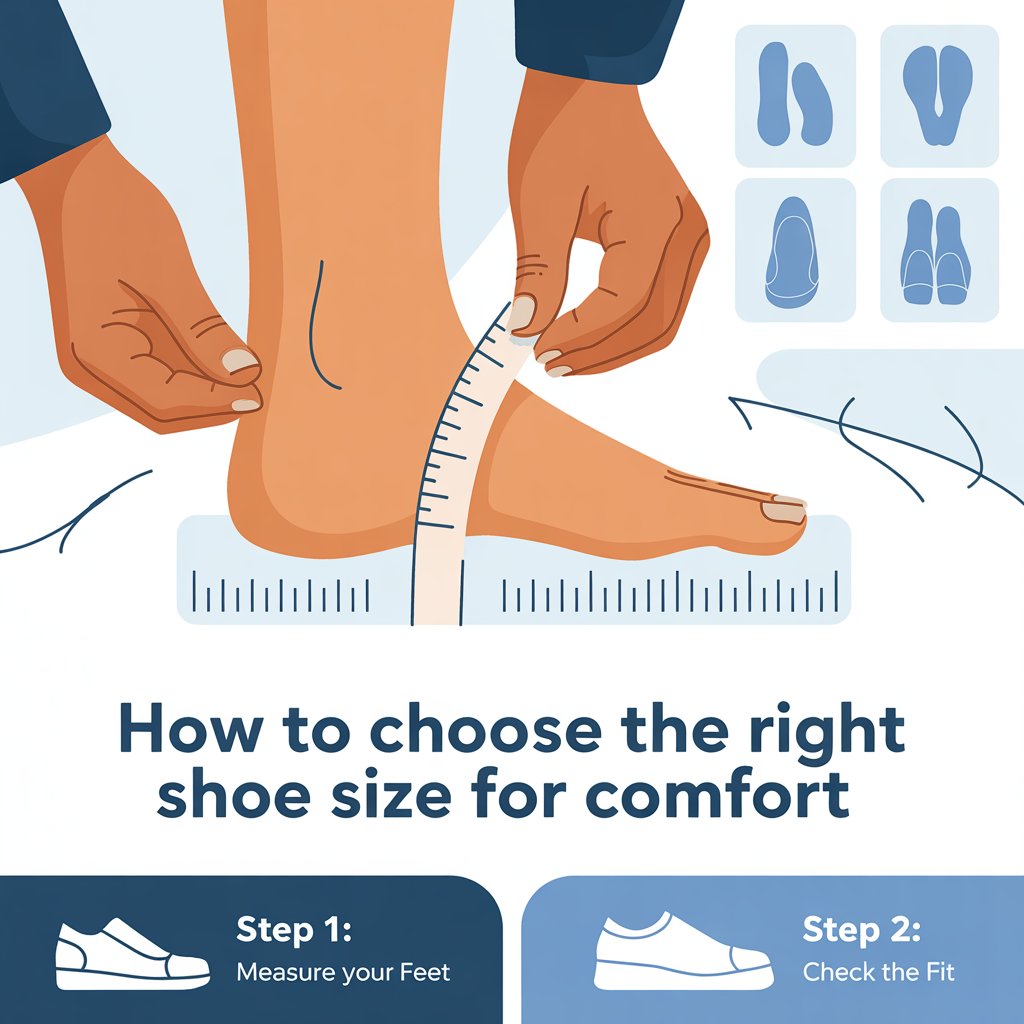
You don’t need professional equipment to get precise foot measurements—just proper technique. The most reliable home method involves tracing your actual foot weight-bearing position, which captures your true dimensions under load. This differs significantly from non-weight-bearing measurements that omit how your arch flattens and toes spread when standing.
Essential Measurement Supplies
Before you begin, gather these items:
- Flat paper surface (newsprint or craft paper works better than newspaper)
- Pencil with flat edge (not a pointed tip for accuracy)
- Rigid ruler or metal tape measure (fabric tapes stretch)
- Helper (for tracing accuracy while standing)
Pro Tip: Measure both feet separately—up to 30% of people have a difference of half a size or more between feet. Always size for your larger foot to prevent chronic pressure points.
Step-by-Step Measurement Process
- Timing matters: Measure in the evening when feet are naturally swollen to their maximum daily size
- Wear appropriate socks: Use the same thickness you’ll wear with intended footwear (athletic, dress, etc.)
- Secure your paper: Tape to hard floor surface (not carpet) to prevent movement during tracing
- Stand naturally: Place full weight on foot with slight knee bend, mimicking walking posture
While standing, have your helper trace the foot outline while holding the pencil vertically. Mark the longest toe and widest point before measuring. For length, measure from heel mark to farthest toe point. For width, measure across the ball of the foot at its widest expansion point.
The precision comes in the details: ensure your pencil remains perpendicular to the paper throughout tracing—angling creates inconsistent margins. Nordstrom’s guide emphasizes that even 3mm of measurement error alters your entire size selection, explaining why many shoppers end up in ill-fitting shoes despite “knowing” their size.
Decoding Shoe Sizing Systems: US, EU, and UK Conversions
Understanding international sizing is crucial in today’s global marketplace. That “perfect pair” from a European boutique might fit completely differently than your standard US size. The conversion isn’t linear—each system has unique measurement increments and starting points that create significant variations.
| US Size | EU Size | UK Size | Foot Length (inches) | Foot Length (cm) |
|---|---|---|---|---|
| Women’s 5 | 35.5 | 2.5 | 9.0 | 22.9 |
| Women’s 7 | 37.5 | 4.5 | 9.6 | 24.4 |
| Women’s 9 | 39.5 | 6.5 | 10.2 | 25.9 |
| Men’s 8 | 41 | 7 | 10.3 | 26.2 |
| Men’s 10 | 43 | 9 | 11.0 | 27.9 |
| Men’s 12 | 45 | 11 | 11.7 | 29.7 |
Key conversion insights every US shopper should know:
- EU sizes run larger: A US women’s 8 typically converts to EU 39—not the intuitive 38
- UK sizing is smaller: UK sizes are approximately 0.5-1 full size below US counterparts
- Brand variations exist: Nike may size true to chart while Adidas runs half-size small
- Half-sizes differ: Some brands use 1/3 size increments (2.5mm) while others use 1/2 (5mm)
When shopping internationally, always check the retailer’s specific size chart rather than relying on generic conversions. The Nike AU guide demonstrates why global conversions require brand-specific adjustments due to construction differences.
Finding Your Perfect Width Fit
Width is arguably more crucial than length for comfort, yet most shoppers focus exclusively on numerical size. Modern footwear comes in four primary width designations:
- Narrow (B for women, 2A for men): For feet with minimal spreading under weight
- Medium/Standard (D for men, B for women): The most common manufacturing default
- Wide (2E for men, D for women): Essential for those with bunions or natural width
- Extra Wide (4E+): Critical for post-surgical feet or significant swelling conditions
Pro Tip: Measure width at the ball of your foot while standing—this is where most width-related discomfort occurs. If standard widths cause bulging or indentations, move up a width designation before increasing length.
Many foot problems stem from width compromise. That “snug fit” you think is normal might actually be your foot fighting against unnatural compression. Pay attention to these width warning signs:
- Indentations on the sides of your foot after wearing shoes
- Numbness or tingling during extended wear
- Visible toe deformities developing over time
- Shoes showing uneven wear patterns on the sole
The Vionic Shoes guide emphasizes that width affects biomechanics: a properly fitting width allows natural toe splay during walking, which distributes impact forces evenly across your foot. Without this splay room, pressure concentrates on specific areas, accelerating joint damage and callus formation.
Fit Expectations by Footwear Type
Different shoe styles require different fitting approaches. What feels “right” for running shoes would feel dangerously loose in dress footwear. Understanding these nuances prevents you from misjudging fit based on inappropriate standards.
Shoe Type Fit Guidelines
| Shoe Type | Toe Room | Heel Slippage | Arch Feel | Width Pressure |
|---|---|---|---|---|
| Running Shoes | $1.27–1.91\ \text{cm}$ | $0.32–0.64\ \text{cm}$ | Snug but not tight | Firm embrace |
| Dress Shoes | $0.32–0.64\ \text{cm}$ | None | Precise contour | No bulging |
| Boots | $0.64–0.95\ \text{cm}$ | None when laced | Structured support | Even pressure |
| Sandals | Natural toe positioning | Secure strap | Follows arch curve | No side compression |
For athletic footwear, you need that critical $1.27–1.91\ \text{cm}$ space ahead of your longest toe to accommodate foot swelling during activity. The Clarks guide notes that runners often size up half a size for this reason. Conversely, dress shoes should feel snug from the start since they won’t stretch significantly in wear.
The critical difference lies in function: performance footwear requires expansion room for dynamic movement, while dress styles prioritize precision shaping. Many shoppers make the mistake of applying running shoe fit standards to all footwear types, leading to consistently loose dress shoes that cause instability.
Your Advanced Fitting Checklist
Before finalizing any purchase, complete this verification process:
- Standing test: Wear them standing for 5+ minutes (never buy seated)
- Walk test: Request permission to walk hallway if possible
- Sole check: Press thumb into sole to verify flexibility at ball
- Squeeze test: Grip toe box—if minimal resistance, consider smaller size
Pay special attention to the “break point” where your foot bends—this should align with the shoe’s natural flex point. Misalignment creates unnatural creases and accelerates material fatigue. Additionally, verify adequate heel counter stiffness by squeezing the back of the shoe—your heel should remain stable during movement.
Many brick-and-mortar retailers now offer comprehensive fitting services incorporating pressure mapping technology. Stores like Nordstrom and specialty running shops often provide this at no charge, transforming guesswork into data-driven decisions. When shopping online, leverage retailers with generous return policies specifically for fit issues.
The Long-Term Impact of Proper Sizing
Choosing correctly sized footwear isn’t just about today’s comfort—it’s an investment in lifelong mobility. Properly fitted shoes distribute pressure evenly across your foot, preventing the concentrated stress points that accelerate joint deterioration. This balanced loading reduces your risk of developing osteoarthritis in weight-bearing joints by up to 30% according to podiatric research.
When your footwear respects your foot’s natural architecture, you maintain proper gait mechanics. This preserves the intricate kinetic chain from foot to spine, preventing compensatory movements that lead to back pain and knee issues. Consider that with each mile walked, your feet endure forces equivalent to several tons of cumulative pressure—proper distribution becomes non-negotiable for joint preservation.
The financial perspective further validates this investment: quality shoes fitting correctly last 40-60% longer than ill-fitting pairs, as they avoid the unnatural stress points that cause premature breakdown. When you factor in reduced medical costs from avoiding foot-related conditions, the ROI of proper fitting becomes undeniable.
Final Action Steps for Shoe Sizing Success
Transform your footwear experience with these practical steps:
- Schedule annual measurements: Mark your calendar like a doctor’s appointment
- Create a foot profile: Record length, width, arch height, and problem areas
- Shop later in the day: When feet reach maximum daily size
- Bring your own socks: Ensure accurate fit representation
Pro Tip: Carry a business card-sized foot measurement chart in your wallet—write your exact measurements (not just size numbers) to reference when shopping. Include your dominant foot size if asymmetric.
Most importantly, never accept discomfort as normal. That “breaking in” period should involve softening materials, not enduring pain. Quality footwear should feel supportive from day one, with only minor adjustments needed during initial wear. When shoes pinch, burn, or restrict movement, they’re simply the wrong size—regardless of what the label says.
Your feet carry you through life literally and figuratively—honor them with properly fitted footwear. By mastering these sizing principles, you’ll enjoy immediate comfort while protecting your long-term mobility. Remember: the right size isn’t just a number; it’s the precise intersection of length, width, arch support, and personal biomechanics that creates footwear harmony.
“Wearing the correct shoe size is vital for so many reasons. Practically speaking, the right shoes must fit into your lifestyle—whether you’re walking to work or standing on your feet all day. Finding proper shoes that fit the criteria is a must—otherwise, you’ll end up with a host of foot-related problems.”
— Revere Shoes Fit Guide revereshoes.com